Peptide Purity Overview 98%, 99% & Research-grade Discussed Prg
" Mass spectrometry solutions "is the identified compound constant with the desired peptide identity? " With each other they offer more powerful batch-level evidence than either technique alone. In the usual peptide COA context, peak purity typically describes the portion of overall https://direct-sarms.com chromatogram location stood for by the major peptide height.
- Partial peptide fragments can result from insufficient synthesis or post-synthesis deterioration.In basic terms, a peptide detailed as 95% pure is composed mainly of the target peptide (95%), with the continuing to be ~ 5% comprised of impurities.Asparagine and glutamine deposits can go through deamidation, transforming the peptide's fee and hydrophobicity.HPLC can support claims regarding chromatographic pureness, impurity optimal problem, and deterioration fads when the approach is proper and the chromatogram is available.
Store Coa-verified Research Study Peptides
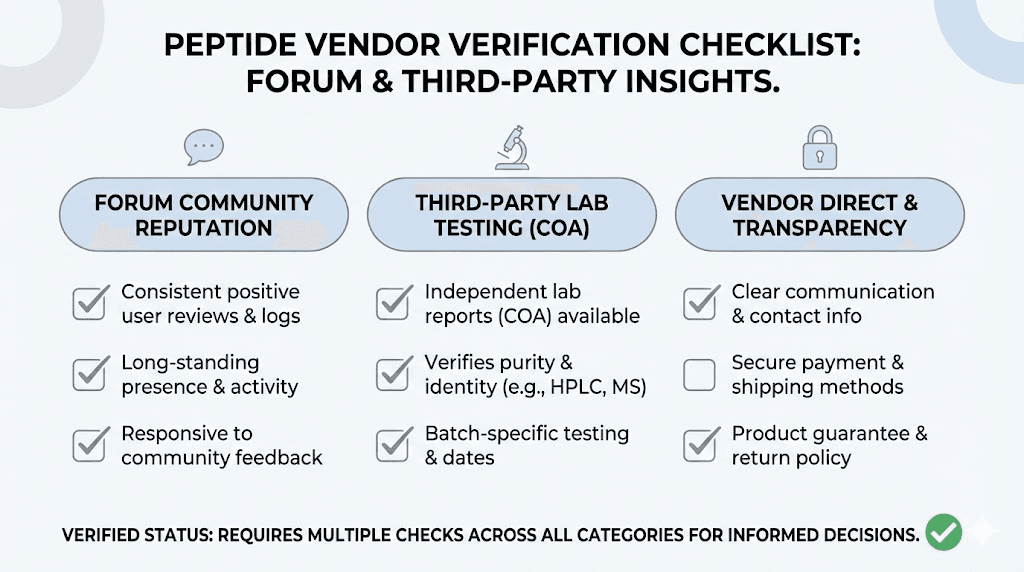
Not every application needs 99% purity, and filtration is a significant component of peptide production expense. Trace amounts of solvents made use of throughout synthesis and purification-- acetonitrile, dimethylformamide (DMF), dichloromethane-- can continue to be in the final product. These are commonly present at really low levels in correctly manufactured peptides and are regulated by ICH Q3C standards for appropriate limits. If the target peptide's optimal make up 99.1% of the complete top location, the peptide is reported as 99.1% pure by HPLC. Many reliable research study peptide vendors utilize third-party laboratories; some conduct in-house screening with magazine of laboratory credentials.

It's feasible to have a peptide that is, state, 95% pure by HPLC and yet the internet peptide content is something like 70% of the powder's weight (the rest being water and salts). Don't be upset-- this is typical and is normally established by separate analyses (like amino acid analysis). Peptide purity is most commonly established by high-performance liquid chromatography (HPLC) with a discovery wavelength of 220 nm, which is optimal for detecting peptide bonds. This approach separates peptides from impurities and measures both target peptides and contaminants, making certain high-quality samples for research study.
Just How Purity Is Gauged: Hplc Discussed Simply
BOC Sciences provides multi-batch contrast analysis to aid clients develop resources top quality standards and make sure consistency. Residual non-peptide parts can transform assay analysis, misshape peptide material estimations, and complicate lot qualification. We sustain targeted analysis of appropriate residuals based on the project and example background.
For groups that need deeper structural review, the work can additionally be lined up with peptide sequence evaluation and wider characterization support. Amino acid analysis or other quantitative approaches can support absolute web content. Chiral methods can deal with enantiomeric pureness where stereochemistry is a concern. Residual-solvent or water-content tests can matter in manufacturing or security contexts.An accredited laboratory adheres to stringent guidelines for examination precision and approach recognition. You can commonly inspect if a laboratory is approved using its site or documents; accreditation makes sure the lab's procedures and outcomes are held to global requirements. With high levels of experience in carb chemistry and our thorough peptide evaluation system, Creative Peptides can give high-grade peptide pureness decision services. According to stringent analysis quality assurance and biosynthetic quality control requirements, each peptide is strictly checked during the analysis cycle.Explore our catalog to watch validated research compounds and find out more concerning our testing and quality control procedure. Also small contaminations can alter outcomes, decrease reproducibility, or introduce undesirable variables right into a study. Scientists depend on exact, verified compounds to ensure their searchings for are both legitimate and consistent.
A sample could generate a clean-looking chromatogram with one dominant top and still be the wrong substance if identification was never verified. HPLC procedures separation and relative peak area; mass spectrometry actions mass-to-charge actions that can be utilized to confirm molecular identity. Peptide purity screening is the procedure of verifying that a peptide example includes just the designated sequence-- and no significant pollutants or by-products from synthesis. Because peptides are created through complex chemical processes, trace pollutants can develop normally. Checking enables researchers to recognize exactly what remains in the vial, confirming both identification and high quality. Choosing a respectable third-party laboratory is vital to getting reliable peptide recognition results.